Clean, safe drinking water remains one of the most critical public health needs in modern society, but it is often taken for granted. However, despite decades of plumbing codes, standards, and training, improperly installed backflow prevention devices and assemblies remain widespread in both commercial and residential settings.
These installation failures are not minor technicalities. Backflow prevention assemblies must be installed correctly so they can:
- Protect the potable water supply
- Be safely tested and maintained
- Perform reliably under real-world conditions
- Protect technicians from unnecessary hazards
Installation requirements are not suggestions — they are minimum standards designed to protect public health and worker safety.
Why Improper Installations Keep Happening
After decades of experience installing, testing, and training professionals in backflow prevention and cross-connection control, one trend remains consistent: pressure to cut costs and minimize space often overrides code compliance.
Contractors and water suppliers frequently face resistance from:
- Property owners focused on cost
- End users concerned about space and aesthetics
- Retrofit projects with limited room
- Facilities where protection was not required when originally built
Add fire sprinkler systems to the conversation, and resistance often increases dramatically.
However, none of these pressures eliminate the responsibility to install backflow protection correctly.
Critical Factors That Must Be Evaluated Before Installation
Every backflow prevention installation is unique. At a minimum, the following factors must be evaluated before selecting or installing any device or assembly:
- Degree of hazard (high or low)
- Location and accessibility
- Incoming water pressure
- Allowable pressure loss
- Thermal expansion
- Current system configuration
- Future system modifications
- Potential future hazards
Failure to consider these factors often leads to installations that are unsafe, non-compliant, or impossible to maintain.
Location Errors: The Most Common Installation Failure
The most frequent and problematic installation error is improper location. Assemblies installed in pits, vaults, ceilings, or elevated over machinery create long-term maintenance and safety nightmares.
Backflow preventers must be installed where they can be:
- Easily accessed for testing and repair
- Properly drained
- Protected from freezing and flooding
- Serviced without confined-space entry
Poor location choices increase costs, risks, and system downtime for the life of the installation.
Vacuum Breakers: Simple Devices, Frequent Mistakes
Atmospheric Vacuum Breakers (AVBs)
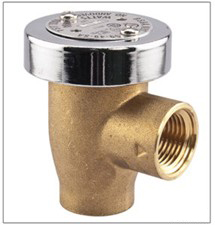
AVBs are among the most misapplied backflow prevention devices in the field.
Key installation requirements:
- Must be installed upright
- Must be installed at least 6 inches above downstream piping and fixture flood rims (check local codes)
- Must not be subjected to continuous pressure (typically no more than 12 hours)
- Must have an outlet open to atmosphere
AVBs protect only against backsiphonage — not backpressure. When installed below flood rims or under constant pressure, they provide no protection and become nothing more than an expensive fitting.
Pressure Vacuum Breaker Assemblies (PVBs)
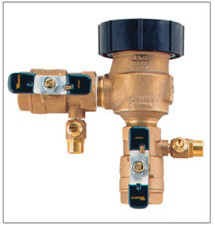
PVBs improve upon AVBs by allowing continuous pressure downstream and offering testability and in-line repair.
Key requirements include:
- Minimum 12 inches elevation above downstream piping and fixtures
- Upright installation only
- Full-port, drip-tight shutoff valves
- Proper consideration of potential water discharge from the air inlet
PVBs are commonly used in irrigation, agricultural, and industrial isolation applications. Freeze protection and accessibility are critical considerations in cold climates.
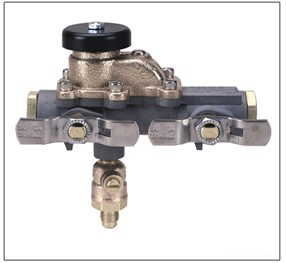
Spill-Resistant Vacuum Breakers (SVBs)
SVBs were developed to address the spillage issues associated with PVBs.
Advantages include:
- Reduced risk of water discharge
- Indoor installation capability
- High and low hazard backsiphonage protection
However, SVBs:
- Require 12 inches of elevation
- Do not protect against backpressure
- Are more expensive than AVBs and PVBs
Assemblies for Backpressure and Backsiphonage Protection
Double Check Valve Assemblies (DCVAs) and Detector Assemblies (DCDAs)
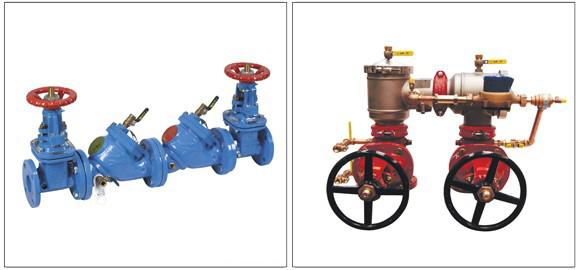
DCVAs and DCDAs are used for low-hazard applications requiring protection against both backpressure and backsiphonage.
Key considerations:
- Commonly used for containment at service connections
- DCDAs are frequently installed on fire protection systems without chemical additives
- Require adequate clearance for testing and repair
Vault installations often lack drainage and create confined-space hazards, significantly increasing long-term maintenance costs.
Reduced Pressure Principle Assemblies (RPs and RPDAs)
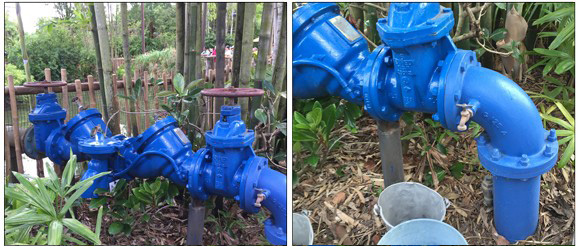
RPs and RPDAs provide the highest level of mechanical backflow protection short of an air gap and are suitable for both low- and high-hazard applications.
Critical installation requirements:
- Never install in pits or vaults
- Provide adequate drainage for relief valve discharge
- Install 12–60 inches above grade
- Provide sufficient side, top, and test cock clearance
- Consider potential water discharge during pressure fluctuations or component failure
Improper RP installations in ceilings, closets, or unprotected indoor spaces frequently result in extensive water damage.
Choosing the Right Protection Matters
Improper selection can be just as dangerous as improper installation.
Real-world examples show:
- Expensive RPs installed where a simple air gap already provides protection
- Missing hose bibb vacuum breakers upstream of costly containment assemblies
- Thousands of dollars spent unnecessarily—while real hazards remain unprotected
The solution is not more devices or assemblies — it is the right devices or assemblies installed correctly.
Best Practices for Backflow Prevention Installation in 2026
To get it right the first time:
- Select the proper device or assembly based on hazard
- Follow manufacturer installation instructions
- Verify local plumbing code requirements
- Ensure accessibility for testing and repair
- Provide freeze and flood protection
- Address drainage and thermal expansion
- Test assemblies at least annually using certified testers
As the long-standing industry principle states:
“Prevention is far better than cure.”
Proper installation protects the public water system, reduces liability, and ensures long-term performance.

Sean Cleary
Sean Cleary serves as Vice President of Industry Programs and Operations for the IAPMO Backflow Prevention Institute, advancing education and technical training in cross-connection control and backflow prevention. The IAPMO Backflow Prevention Institute helps to ensure that the professionals responsible for protecting drinking water are properly trained and certified.
A licensed master plumber with more than four decades of experience, Sean has worked in all phases of the plumbing and mechanical industries, with deep expertise in cross-connection control systems. He is a Past President of the American Society of Sanitary Engineering (ASSE) and served for more than a decade as Chairman of the ASSE Cross-Connection Control Technical Committee. A graduate of the United Association Instructor Training Program, Sean has dedicated much of his career to strengthening professional competency, standards alignment, and technical excellence across the industry.
Under Sean’s leadership, the IAPMO Backflow Prevention Institute prepares plumbers, pipe fitters, irrigation techs, sprinkler fitters, HVAC techs, plumbing engineers, inspectors, facility managers to earn and maintain ASSE and other industry certifications through comprehensive training and continuing education offered across the United States and internationally. Sean co-authored the IAPMO Backflow Reference Manual and has contributed to numerous technical publications. Through his work with IAPMO, ASSE, the American Society of Plumbing Engineers (ASPE), and state plumbing inspector organizations, Sean helps ensure that certified professionals are equipped to prevent contamination and safeguard the drinking water systems communities rely on every day.