Backflow Prevention Installation Mistakes That Still Persist in 2026
After traveling across the United States conducting cross-connection control training, performing surveys, and answering questions about problematic backflow prevention installations, one issue remains surprisingly common: failure to follow the adopted plumbing code.
Despite clear requirements in the model plumbing codes, backflow preventers are still routinely installed incorrectly. The question remains just as relevant in 2026 as it was years ago: Why don’t we simply follow the plumbing code?
Prohibited Locations for Backflow Preventers
The plumbing code is unambiguous when it comes to installation locations. The Uniform Plumbing Code (UPC) clearly prohibits installing certain backflow prevention devices in pits, vaults, or underground locations.
UPC Section 603.4.9 – Prohibited Locations states:
Backflow prevention devices with atmospheric vents or ports shall not be installed in pits, underground, or submerged locations. Backflow preventers shall not be located in an area containing fumes that are toxic, poisonous, or corrosive.
This prohibition applies to Reduced Pressure Principle Assemblies (RP), Pressure Vacuum Breakers (PVB), Spill-Resistant Vacuum Breakers (SVB), Atmospheric Vacuum Breakers (AVB), and other similar devices. The intent is straightforward: these assemblies and devices must discharge to atmosphere and cannot function safely if submerged or confined.
Yet RP assemblies continue to be installed in pits and vaults in many jurisdictions.
The Problem with ‘Berm’ and Pit Installations
Some jurisdictions allow pit or vault installations using “berm” designs with a drain-to-daylight feature sized to match the relief valve discharge. While often approved locally, these installations introduce significant risks:
- Drains can become blocked
- Cold air can enter through daylight drains
- Animals and insects can access the vault
- Assemblies can become submerged
- Freeze damage can occur in cold climates
These issues are well known, and the code already provides approved solutions.
Code-Compliant Freeze Protection Exists
Cold climates are not an excuse for improper installations. The UPC directly addresses freeze protection.
UPC Section 603.4.7 – Freeze Protection states:
In cold climate areas, backflow assemblies and devices shall be protected from freezing with an outdoor enclosure that complies with ASSE 1060 or by a method acceptable to the Authority Having Jurisdiction.
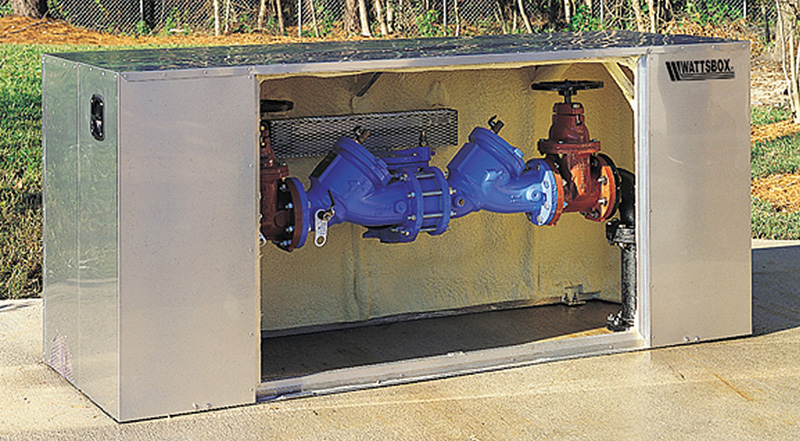
ASSE 1060–compliant enclosures are designed to protect backflow assemblies in temperatures down to –30°F. These enclosures also eliminate confined-space hazards, improve accessibility, and reduce long-term maintenance costs.
Installing devices in pits not only violates code, it increases liability and puts technicians at risk. The safer, code-compliant ASSE 1060 enclosure solution already exists.
Accessibility for Testing and Repair Is Not Optional
Backflow preventers are mechanical devices that must be tested, maintained, and eventually repaired or replaced. Accessibility is not a suggestion; it’s a requirement.
UPC Section 603.4.3 – Access and Clearance requires:
- Compliance with manufacturer’s instructions
- A minimum of 12 inches clearance from grade or floor
- Platforms for assemblies installed more than 5 feet above grade
This is an issue where the model codes differ regarding clearance. All three model codes require the 12-inch minimum from floor or grade, but the International Plumbing Code does not require platforms for assemblies installed more than 5 feet above floor or grade. Installing a backflow preventer near a ceiling or in a cramped location may make installation easier, but it makes future testing and repairs difficult or impossible. These installations violate the code and reflect poor workmanship.
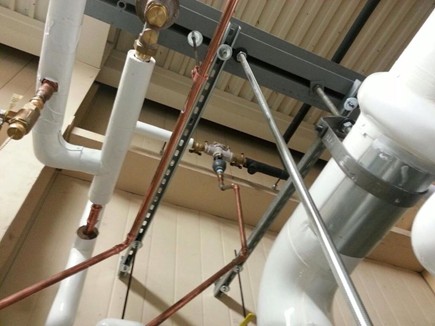
A professional installation considers not only today’s install, but tomorrow’s testing.
Drainage Requirements Are Often Overlooked
Many backflow prevention assemblies — especially large RP assemblies — require properly sized drains.
UPC Section 603.4.8 – Drain Lines states:
Drain lines serving backflow devices or assemblies shall be sized in accordance with the discharge rates of the manufacturer’s flow charts.
Large relief valve discharge volumes can easily exceed a building’s drainage capacity. This must be evaluated during design and installation, not discovered after a failure. Pressure vacuum breakers and atmospheric vacuum breakers may also require floor drains or discharge piping. Incorrect drainage issues should be reported by certified testers when submitting test reports to building owners and the authority having jurisdiction.
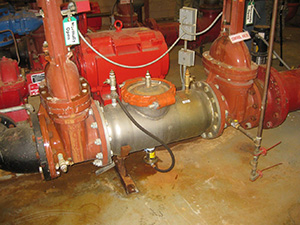
Ignoring drainage requirements leads to flooding, property damage, and non-compliant installations.
Persistent Cross-Connection Protection Errors
The UPC clearly defines installation standards for:
- Air gaps
- Vacuum breaker heights
- Flushometer valve protection
- Access and clearance
- Proper device and assembly selection
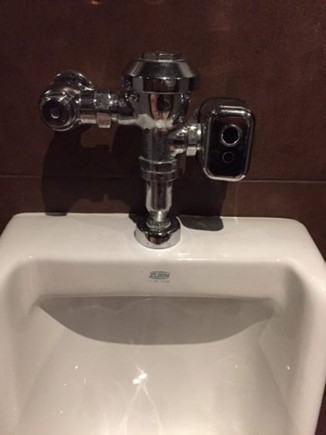
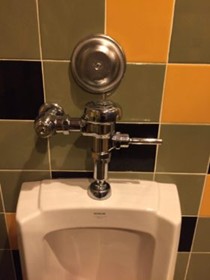
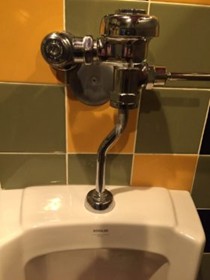
Yet incorrect installations continue, especially with flushometer valves on water closets and urinals.
UPC Section 603.5.1 – Atmospheric Vacuum Breakers requires:
- Installation on the discharge side of the flushometer
- Critical level at least 6 inches above the overflow rim of a water closet or the highest part of a urinal (or per listing)
This requirement is frequently ignored, even though it is clearly spelled out in the code. The continued presence of these errors raises an uncomfortable question: Why are installers and inspectors allowing non-compliant work to pass?
Education and Enforcement Are the Real Solutions
The plumbing codes already provide the answers. What’s missing is consistent education and enforcement.
We need:
- Qualified, licensed installers who understand the code
- Inspectors who understand and enforce the adopted standards
- Ongoing education for contractors, designers, and inspectors
- Willingness to address and correct improper work
Codes exist to protect public health, safety, and property. Accepting substandard installations undermines the entire system.
There are a right way and a wrong way to install backflow prevention. As an industry, we must insist on doing it right, every time.

Sean Cleary
Sean Cleary serves as Vice President of Industry Programs and Operations for the IAPMO Backflow Prevention Institute, advancing education and technical training in cross-connection control and backflow prevention. The IAPMO Backflow Prevention Institute helps to ensure that the professionals responsible for protecting drinking water are properly trained and certified.
A licensed master plumber with more than four decades of experience, Sean has worked in all phases of the plumbing and mechanical industries, with deep expertise in cross-connection control systems. He is a Past President of the American Society of Sanitary Engineering (ASSE) and served for more than a decade as Chairman of the ASSE Cross-Connection Control Technical Committee. A graduate of the United Association Instructor Training Program, Sean has dedicated much of his career to strengthening professional competency, standards alignment, and technical excellence across the industry.
Under Sean’s leadership, the IAPMO Backflow Prevention Institute prepares plumbers, pipe fitters, irrigation techs, sprinkler fitters, HVAC techs, plumbing engineers, inspectors, facility managers to earn and maintain ASSE and other industry certifications through comprehensive training and continuing education offered across the United States and internationally. Sean co-authored the IAPMO Backflow Reference Manual and has contributed to numerous technical publications. Through his work with IAPMO, ASSE, the American Society of Plumbing Engineers (ASPE), and state plumbing inspector organizations, Sean helps ensure that certified professionals are equipped to prevent contamination and safeguard the drinking water systems communities rely on every day.