A common question in the plumbing, fire protection, and water utility industries is whether backflow prevention assemblies are necessary on fire sprinkler systems. Related questions quickly follow:
- Are backflow preventers required on residential fire protection systems?
- Do combined domestic and fire systems need protection?
- Is backflow protection worth the pressure and volume loss?
- Have fire protection systems actually caused documented backflow incidents?
These questions frequently arise during cross-connection control discussions, public meetings, and regulatory hearings where plumbing and fire codes are debated and amended.
Why Backflow Protection Still Matters
Effective cross-connection control programs have significantly reduced reported backflow incidents over the years. Ironically, that success has led some to believe that backflow is no longer a real concern.
That assumption is dangerous.
Backflow occurs when pressure conditions change within a water system — and every water system experiences pressure fluctuations. Loss of pressure is not a matter of if, but when. When that happens, any unprotected cross-connection becomes a potential contamination pathway.
The correct approach in 2026 is not “one-size-fits-all” protection, but hazard-based evaluation. Each fire protection system must be reviewed individually to determine the level of protection required.
 |
Fire Protection Systems Are Designed Around Risk
The NFPA 13 Standard for the Installation of Sprinkler Systems requires fire protection systems to be designed based on the fire hazard of the occupancy. A warehouse, aircraft hangar, apartment building, and hospital all require different system designs.
Backflow protection must follow the same logic.
|
A system protecting a low-hazard residential occupancy does not present the same risk as a system protecting a high-hazard industrial facility. Plumbing codes recognize this distinction.
Plumbing Code Requirements for Fire Protection Systems
The adopted plumbing code governs how potable water supplies serving fire protection systems must be protected.
 |
Uniform Plumbing Code (UPC) Section 603.5.14 – Protection from Fire Systems requires that potable water supplies to fire protection systems that are normally under pressure be protected by one of the following testable backflow prevention assemblies:
- Double Check Valve Assembly (DC)
- Double Check Detector Assembly (DCDA)
- Reduced Pressure Principle Assembly (RP)
- Reduced Pressure Detector Assembly (RPDA)
|
This applies to most commercial and multi-family systems. One- and two-family residential sprinkler systems are treated differently only when potable piping materials are used throughout.
Standalone systems using non-potable piping materials require the same protection as commercial systems.
When Chemicals Are Added, Protection Increases
The hazard level changes when chemicals are introduced.
UPC Section 603.5.14.2 – Chemicals requires high-hazard protection when antifreeze, corrosion inhibitors, or other additives are present.
In these cases, protection must be provided by:
- Reduced Pressure Principle Assembly (RP), or
- Reduced Pressure Detector Assembly (RPDA)
While RPs provide the highest level of protection, they also introduce greater pressure loss and drainage requirements. Installing high-hazard protection where it is not required can negatively impact system performance and unnecessarily increase cost.
Fire Department Connections Create Additional Risk
Fire department connections (FDCs) introduce another potential cross-connection hazard.
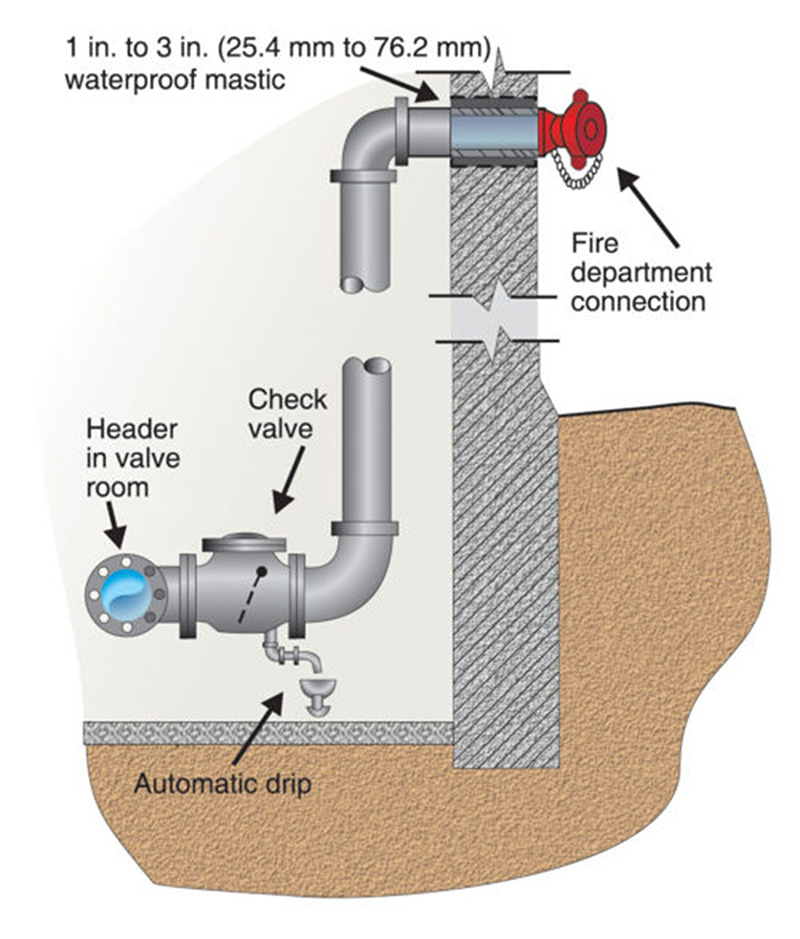
UPC Section 603.5.14.1 – Fire Department Connections requires RP-level protection when:
- A fire department connection is within 1,700 feet of a non-potable water source, and
- That source may be used by the fire department during firefighting operations
Fire departments prioritize life safety and water volume not backflow prevention. Water from tankers, draft sources, or chemically treated supplies may be introduced into the system, increasing contamination risk.
Hydraulic Design Must Account for Backflow Devices and Assemblies
Backflow preventers reduce available pressure and flow. The plumbing code requires system designers to account for this.
UPC Section 603.5.14.3 – Hydraulic Design mandates that:
- Pressure loss through the backflow device be included in system calculations
- Existing systems be re-evaluated when backflow protection is retrofitted
Failure to do so can compromise fire sprinkler performance — a life safety issue.
Standpipe Systems and Backflow Requirements
Standpipe systems are commonly found in large or multi-story buildings.
- Dry standpipe systems, which are filled only when connected to a fire department pumper, do not require backflow protection.
- Wet standpipe systems, which are connected to the potable water supply, require a double check valve assembly.
Understanding system type is essential when selecting proper protection.
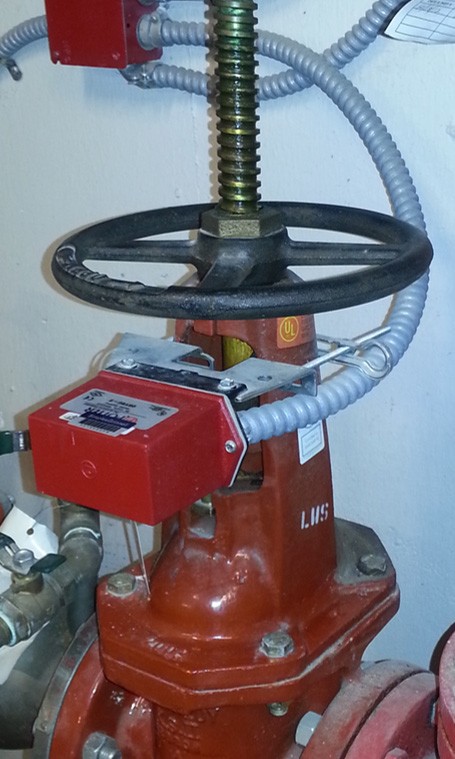
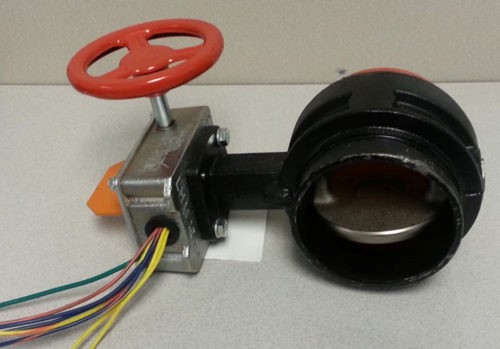
Control Valves Must Be Supervised
All fire protection backflow installations require indicating and supervised control valves, including:
- OS&Y valves
- Butterfly valves
- Post indicator valves (PIV)
- Wall indicator valves (WIV)
- Ball valves
These valves must remain open for the system to function. Supervisory devices — locks, alarms, or both — ensure valves cannot be closed without notification. NFPA 13 refers to these as supervisory devices.
Fire Sprinkler System Types and Backflow Considerations
Fire sprinkler systems fall into several categories, each with different implications for backflow protection:
- Wet Pipe Systems – Water present at all times; common in heated spaces
- Antifreeze Systems – Require high-hazard protection due to chemical additives
- Dry Pipe Systems – Pressurized air or nitrogen; water enters only when activated
- Pre-Action Systems – Activated by detection systems; common in sensitive areas
- Deluge Systems – All heads open; used in high-hazard occupancies like aircraft hangars
Backflow protection is required for all potable-supplied systems. The level of protection depends on system design and hazard classification.
Testing, Maintenance, and Qualified Personnel
Backflow prevention assemblies installed on fire protection systems must be tested and maintained by certified backflow testers who understand:
 |
- Fire system hydraulics
- NFPA 13 installation requirements
- NFPA 25 inspection, testing, and maintenance standards
- System restoration procedures after testing
|
Improper testing or restoration can disable a life safety system.
No One-Size-Fits-All Solution
Backflow protection always affects pressure and flow. That makes proper device or assembly selection critical. Over-protecting a system can be just as problematic as under-protecting it.
Each fire protection system — large or small, residential or commercial — must be evaluated individually. The laws of physics apply to all systems equally, and protecting the potable water supply must remain the shared goal.

Sean Cleary
Sean Cleary serves as Vice President of Industry Programs and Operations for the IAPMO Backflow Prevention Institute, advancing education and technical training in cross-connection control and backflow prevention. The IAPMO Backflow Prevention Institute helps to ensure that the professionals responsible for protecting drinking water are properly trained and certified.
A licensed master plumber with more than four decades of experience, Sean has worked in all phases of the plumbing and mechanical industries, with deep expertise in cross-connection control systems. He is a Past President of the American Society of Sanitary Engineering (ASSE) and served for more than a decade as Chairman of the ASSE Cross-Connection Control Technical Committee. A graduate of the United Association Instructor Training Program, Sean has dedicated much of his career to strengthening professional competency, standards alignment, and technical excellence across the industry.
Under Sean’s leadership, the IAPMO Backflow Prevention Institute prepares plumbers, pipe fitters, irrigation techs, sprinkler fitters, HVAC techs, plumbing engineers, inspectors, facility managers to earn and maintain ASSE and other industry certifications through comprehensive training and continuing education offered across the United States and internationally. Sean co-authored the IAPMO Backflow Reference Manual and has contributed to numerous technical publications. Through his work with IAPMO, ASSE, the American Society of Plumbing Engineers (ASPE), and state plumbing inspector organizations, Sean helps ensure that certified professionals are equipped to prevent contamination and safeguard the drinking water systems communities rely on every day.