Left: The BioPure HX2 Dialysis Water System. (Image credit: www.mcpur.com) Right: During hemodialysis, your blood is pumped through a filter, called a dialyzer. (Image credit: www.niddk.nih.gov)
Water drawn from natural sources — rivers, lakes, streams, and wells — often contains microorganisms, dissolved chemicals, and suspended particles. Before it can be used as potable water, process water, or system water for heating, cooling, or irrigation, it must be treated to reduce contaminants to safe and appropriate levels.
In 2026, water treatment technologies continue to expand across both residential and commercial environments, increasing the need for proper cross-connection control and backflow prevention.
Common Water Treatment and Filtration Systems
Today’s water treatment methods include:
- Sedimentation and filtration
- Chemical disinfection
- Ultraviolet (UV) treatment
- Ozone treatment
- Reverse osmosis (RO)
- Desalination
While UV and ozone systems are effective against biological contaminants, they do not remove dissolved chemicals or particulates. Reverse osmosis removes a wide range of contaminants but also strips beneficial minerals and typically discharges wastewater during operation.
Each of these systems, when connected to a potable water supply, introduces potential cross-connection risks that must be evaluated and controlled.
High-Purity Water Systems in Commercial Applications
Many commercial and institutional settings require water that exceeds potable standards. Manufacturing, laboratories, and healthcare facilities often rely on highly treated or purified water.
A common example is hemodialysis, where a single treatment can use 23–50 gallons of highly treated water per patient. Dialysis water systems, like other high-purity systems, represent a high hazard of cross-connection and require appropriate backflow protection to safeguard the potable water supply.
Heating, Cooling, and Chemical Treatment Risks
Water used in heating and cooling systems is often chemically treated to reduce corrosion and scale. Antifreeze may be added to prevent freezing in cooling towers, hydronic systems, and heat exchangers.
Although plumbing codes require non-toxic antifreeze, toxic chemicals are still commonly found in real-world installations. These conditions elevate the hazard classification and require high-level backflow protection, such as reduced pressure principle assemblies.
Water Softeners, Filters, and Drainage Concerns
Water softeners and filtration systems are often misunderstood as “safe” pass-through devices. In reality, reversing flow through these systems can significantly degrade water quality.
Proper installation is critical:
- Drain lines must be properly air-gapped and code-compliant
- Brine tanks and regeneration cycles must be considered
- Backflow protection may be required depending on hazard level
Improper installations can easily create unprotected cross-connections.
DIY Installations and Residential Risks
In residential settings, water treatment devices are frequently marketed as DIY projects. Modern push-fit fittings and plastic piping can make installation appear simple, but ease of installation does not equal safety.
 |
Homeowners and untrained installers often lack understanding of:
- Pressure loss and hydraulic changes
- Thermal expansion
- Backflow that includes both backpressure and backsiphonage risks
- Plumbing code requirements
Modifying a potable water system without proper knowledge can result in contamination, property damage, or system failure.
|
Commercial Installations After Final Inspection
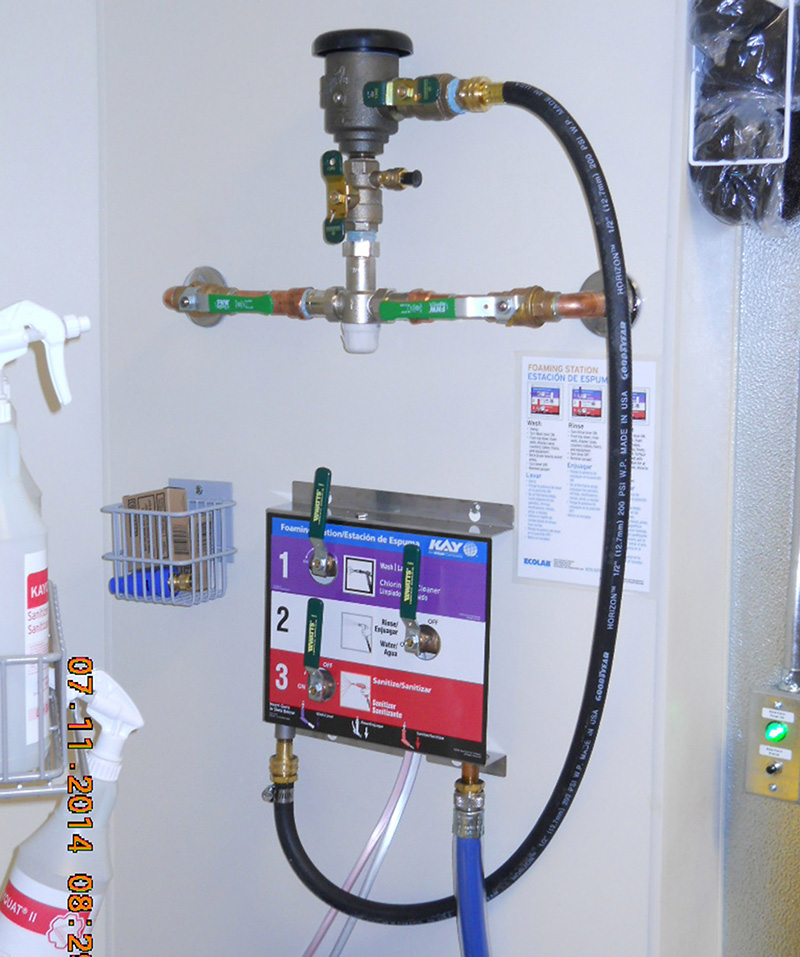
Commercial facilities face similar risks. Kitchen equipment, beverage systems, cleaning equipment, chemical dispensers, and soap dispensers are often installed after final inspections by individuals unfamiliar with plumbing codes or cross-connection control.
A single incorrect connection can compromise the entire system. One real-world example involved a coffee machine connected via a saddle valve to a hydronic heating line instead of potable water piping, resulting in taste complaints and a serious contamination risk.
Critical Questions Before Any Installation
Before connecting any equipment or system to a potable water supply, the following questions must be answered:
- How will this installation affect water quality?
- How will it impact system pressure and hydraulics?
- Does it create a direct or indirect cross-connection?
- Does it change the facility’s hazard classification?
- What type of backflow protection is required?
- How will protection affect system performance?
- What testing and maintenance will be required?
Failure to address these questions invites unnecessary risk.
Proper Protection Depends on the Hazard
Backflow protection solutions range from simple to complex:
- Air gaps
- Atmospheric, spill resistant or pressure vacuum breakers
- Double check valve assemblies
- Reduced pressure principle assemblies
There is no universal solution. Each installation must be evaluated individually by qualified professionals who understand both the equipment and the plumbing system as a whole.
Education, Training, and Responsibility
Installing water treatment equipment is not just about functionality — it’s about protecting public health. Installers, facility managers, and end users must understand:
- Maintenance requirements
- Testing schedules
- Operational risks
In 2026, as water systems become more complex, the role of education and certification has never been more important. Protecting potable water requires informed decisions, proper installations, and ongoing oversight.
Our water supply is one of our most valuable resources. Safeguarding it through proper backflow prevention and cross-connection control must remain a shared responsibility in both residential and commercial settings.

Sean Cleary
Sean Cleary serves as Vice President of Industry Programs and Operations for the IAPMO Backflow Prevention Institute, advancing education and technical training in cross-connection control and backflow prevention. The IAPMO Backflow Prevention Institute helps to ensure that the professionals responsible for protecting drinking water are properly trained and certified.
A licensed master plumber with more than four decades of experience, Sean has worked in all phases of the plumbing and mechanical industries, with deep expertise in cross-connection control systems. He is a Past President of the American Society of Sanitary Engineering (ASSE) and served for more than a decade as Chairman of the ASSE Cross-Connection Control Technical Committee. A graduate of the United Association Instructor Training Program, Sean has dedicated much of his career to strengthening professional competency, standards alignment, and technical excellence across the industry.
Under Sean’s leadership, the IAPMO Backflow Prevention Institute prepares plumbers, pipe fitters, irrigation techs, sprinkler fitters, HVAC techs, plumbing engineers, inspectors, facility managers to earn and maintain ASSE and other industry certifications through comprehensive training and continuing education offered across the United States and internationally. Sean co-authored the IAPMO Backflow Reference Manual and has contributed to numerous technical publications. Through his work with IAPMO, ASSE, the American Society of Plumbing Engineers (ASPE), and state plumbing inspector organizations, Sean helps ensure that certified professionals are equipped to prevent contamination and safeguard the drinking water systems communities rely on every day.